20.05.2021
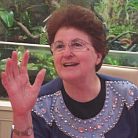
Geraldine Auerbach
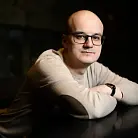
Denis Viren
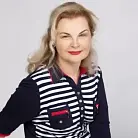
Inessa Dvuzhilnaya
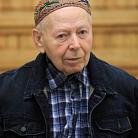
Земцовский
Изалий Иосифович
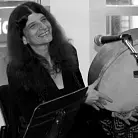
Judith Rita Cohen
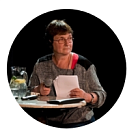
Левитан
Ольга
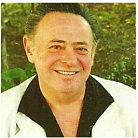
Лоберан
Исаак
Лукин
Михаэль
Меир
Рами
Оконсар
Давид Эзра

Пахомова
Светлана
Родов
Илья
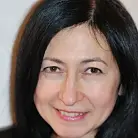
Сквирская
Тамара Закировна
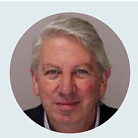
Фальх
Нильс
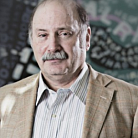
Фелдман
Зев
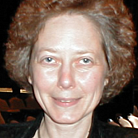
Фригьеши
Юдит
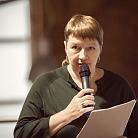
Хаздан
Евгения Владимировна
Lidia Chakovskaya
Giula Shamilli
Шмулевич-Ванникова
Хава

Martha Stellmacher
Элиасберг
Галина Аркадьевна

Юркич-Свибен
Тамара
Огорелышева
Наталия
Ekaterina Belkina
Vladislav Ivanov
International session on Jewish Art-2021
The scientific session on Jewish Art on May 20-21, 2021 at the State Institute for Art Studies was the first event dedicated to the interdisciplinary study of Jewish art in the system of the Russian Academy of Sciences. In the welcoming speech of the director, Doctor of Art History Natalia Sipovskaya, the thesis was voiced, according to which Jewish art is "not a narrowly national and not a narrowly local topic, but forms around itself a wide range of problems related to identity, contacts and the implementation of completely contrasting artistic traditions on a common root."Geraldine Auerbach, founder of the Institute of Jewish Music at the University of London and founder of the International Forum on Jewish Music, noted that Jewish art is a "microcosm of the world's artistic heritage" due to the peculiarities of the history of the people. "Our goal is to develop new areas of research and offer educational programs," said Mark Kligman, director of the Lowell Milken Foundation for American Jewish Music and Professor of Ethnomusicology.
The session, held within the framework of the Reuven Mazel's East lecture and exhibition project (Grant from Museum Initiatives and Exhibition Projects, 2020-2021), was accompanied by the "Week of Jewish Art in SIAS" (May 17-21). It brought together more than forty scientists from fifteen countries — Russia, Belarus, Ukraine, Lithuania, Azerbaijan, Croatia, Austria, the Netherlands, Germany, Great Britain, Israel, Turkey, Belgium, the USA and Canada.
The first day of the Session was devoted to the topic "Migration and Transformation in Jewish Music," announced by the International Forum for the Study of Jewish Music as a priority area of research for 2020-2023. Presentations were made by Dr. Judith Frigeshi-Niran (Israel), Dr. Judith Cohen (Canada), Dr. Walter Zev Feldman (USA, UAE), Dr. Niels Falch (Netherlands), Dr. Michael Lukin (Israel), Dr. Marsha Dubrov (USA), PhD in Art History Evgeniya Khazdan (Russia), Dr. Marta Stellmacher (Germany), Doctor of Art History Giula Shamilli (Russia), musicologist Isaac Loberan (Austria), Candidate of Art History Inessa Dvuzhilnaya (Belarus), Candidate of Art History Valeria Fedotova (Russia), Dr. David-Ezra Okonsar (Belgium-Turkey), Dr. Tamara Jurkic Sviben (Croatia), Tamara Skvirskaya (Russia), Inna Manolova (Russia), PhD in Art History, Khava Shmulevich-Vannikova (Israel), Ilya Saitanov (Russia).
The second day of the Session was devoted to the topic "Jewish Art. From theory to practice." The reports of the five sections covered a wide range of issues, from methodology to Jewish identity in the theory and practice of plastic, space―time, and applied art: Dr. Ilya Rodov (Israel), Candidate of Art History Lidiya Chakovskaya (Russia), Doctor of Art History Vladislav Ivanov (Russia), Doctor Olga Levitan (Israel), Candidate of Philology Galina Eliasberg (Russia), Candidate of Art History Grigory Shapiro (Russia), Candidate of Historical Sciences Anastasia Baukova (Ukraine), graduate student Ekaterina Belkina (Russia), Candidate of Art History Denis Viren (Russia), art historian Svetlana Pakhomova (Russia), Doctor of Historical Sciences Tatiana Emelianenko (Russia), artist Rami Meir (Israel-Azerbaijan), Master's degree Natalia Ogorelysheva (Belarus), student Victoria Kiriltseva (Lithuania), art critic Anna Voshchinchuk (Belarus), musicologist Rafael Nektalov (USA), Rabbi Boruch Babayev (USA), musicologist, singer Ezro Malakov (USA), Doctor of Art History Izali Zemtsovsky (USA).
Issues related to terminology, melody, and the processes of transformation of Jewish liturgy, analytical approaches to the study of Jewish music and liturgy, cross-cultural interactions, the work of classical and modern Jewish composers, Jewish themes in music and other arts, the memory of the Holocaust in composing, dance and gesture in the tradition of Eastern European Jews, and issues of Jewish culture were discussed. identity in art; approaches to the study of Jewish fine art; socio-cultural functions and the problem of preserving synagogues; the specifics, repertoire and reflection of the Jewish theater; applied art of Bukharian and Caucasian Jews, etc.